After servicing HVAC systems across the Orlando area through multiple allergy seasons, one pattern is consistent — the homes with the worst indoor allergy symptoms almost always have the most neglected air systems. Oak pollen, mold spores, and humidity don't just affect you outside. They infiltrate your ductwork, coat your coils, and recirculate through every room. A pre-season tune-up closes those gaps before symptoms start.
TL;DR Quick Answers
HVAC Tune-Up in Orlando
An HVAC tune-up in Orlando is a professional preventive maintenance service that inspects, cleans, and optimizes your heating and cooling system for Central Florida's demanding climate conditions.
What it covers:
Evaporator and condenser coil cleaning
Filter inspection and replacement
Condensate drain line clearing
Refrigerant level check
Electrical connection inspection
Thermostat calibration and system performance testing
Why Orlando homes need it more than most:
Year-round cooling season puts continuous stress on HVAC systems
High humidity accelerates mold growth on coils and in drain lines
Overlapping pollen cycles from January through summer compromise filtration faster
Indoor allergen levels rise quickly when key system components go unserviced
When to schedule:
Primary tune-up: December through early January before allergy season peaks
Secondary tune-up: Early fall before humidity surges again
What it costs:
Most Orlando tune-ups range between $75 and $200
Maintenance plan memberships reduce per-visit cost with scheduled biannual service
Bottom line: In Orlando's climate, an HVAC tune-up is the single most impactful step a homeowner can take to protect both system performance and indoor air quality before allergy season arrives.
Top Takeaways
Orlando's allergy season is a year-round HVAC challenge. Overlapping pollen cycles, persistent humidity, and extended cooling seasons create conditions most climates never face. A pre-season tune-up addresses all three — before symptoms start.
A neglected HVAC system doesn't just underperform — it redistributes allergens. Dirty coils, clogged filters, and blocked drains turn your air system into an allergen circulation loop. Servicing these components breaks that cycle before peak pollen season arrives.
A dirty filter hurts your health and your energy bill at the same time. The same clogged filter raising energy consumption by up to 15% is allowing pollen, mold spores, and fine particulates to bypass filtration entirely — compounding two problems with one neglected maintenance task.
Timing your tune-up matters as much as getting one. Orlando's primary pollen surge runs January through early summer. Scheduling service in December or early January puts your system in peak condition before allergen loads peak — not after symptoms have already taken hold.
Indoors is where Orlando families are most exposed. Americans spend roughly 90% of their time inside. Indoor pollutant levels frequently exceed outdoor levels. The condition of your HVAC system directly determines the air quality your family lives in every single day.
Why Orlando's Climate Makes Allergy Season Harder on Your HVAC System
Central Florida's combination of heat, humidity, and year-round pollen activity creates conditions that most HVAC systems aren't prepared to handle without regular maintenance. Unlike drier climates where allergens are largely seasonal, Orlando's humidity keeps mold spores and dust mites active well beyond traditional pollen peaks. That moisture gets pulled into your system daily — and without a properly maintained filter, coil, and drainage system, it doesn't leave.
What an Allergy-Focused HVAC Tune-Up Actually Addresses
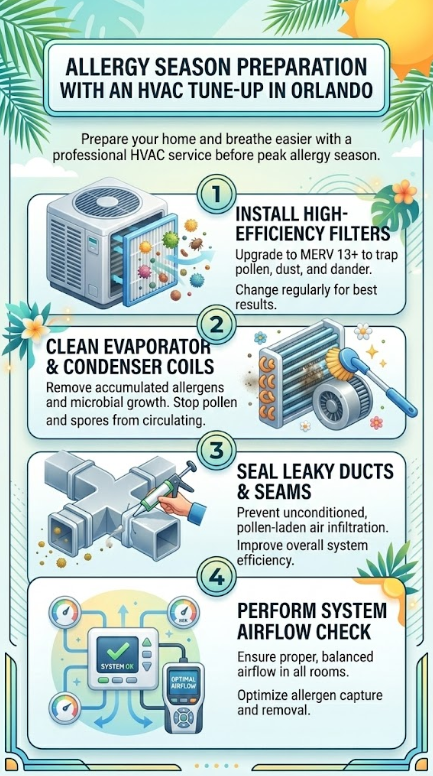
A standard tune-up checks mechanical performance. An allergy-focused tune-up goes further. Key service points that directly impact indoor air quality include:
Evaporator coil cleaning — Biofilm and mold growth on coils circulate contaminants with every cooling cycle
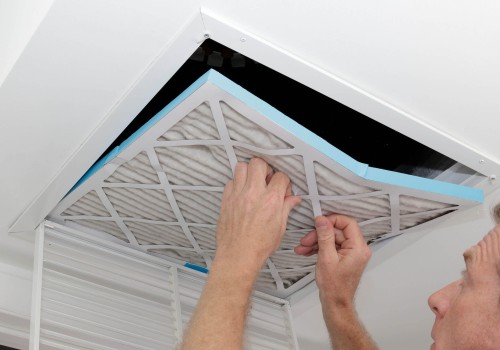
Filter inspection and upgrade — A MERV 11 or higher filter captures pollen, mold spores, and fine particulates a standard filter misses
Condensate drain clearing — A blocked drain line creates standing water, feeding mold growth inside the air handler
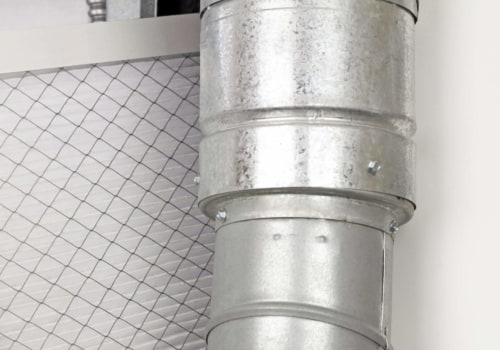
Ductwork inspection — Gaps and leaks pull unconditioned air — and whatever's in it — directly into your living spaces
Blower component cleaning — Dust and debris buildup on the blower reduces airflow and recirculates settled allergens
The Right Time to Schedule Your Tune-Up in Orlando
Timing matters. Orlando's primary allergy surge runs from late January through April, driven largely by oak, cedar, and grass pollen. Scheduling your HVAC tune-up in December or early January puts your system in peak condition before allergen loads peak — not after symptoms are already affecting your household. A second tune-up in early fall also addresses mold and ragweed season before humidity peaks again.
How a Tuned HVAC System Reduces Indoor Allergen Load
A properly serviced HVAC system does more than cool your home — it actively works to reduce what's circulating in your air. Clean coils don't harbor mold. Upgraded filters intercept pollen before it reaches your living areas. A clear condensate line eliminates a primary mold source. Together, these improvements create a measurable reduction in airborne allergens — something Orlando households with allergy sufferers notice quickly after a thorough pre-season service.
Professional Tune-Up vs. DIY — What Makes the Difference
Changing your filter at home is a good habit. But the components that most directly affect allergy season performance — coil condition, drain line integrity, duct sealing, and refrigerant levels affecting humidity control — require a trained technician to properly inspect and service. A professional tune-up also provides a baseline assessment of your system's overall condition, identifying issues that could compromise both air quality and efficiency heading into Orlando's long cooling season.

"After inspecting hundreds of HVAC systems across Central Florida, the connection between poor system maintenance and severe allergy symptoms inside the home is impossible to ignore — clean the system, and families consistently report breathing better within days."
Your Go-To Guide: 7 Trusted Resources for HVAC Tune-Up and Allergy Season Preparation in Orlando
As your neighbors who happen to be HVAC professionals, we want to make sure you have everything you need to make a confident, informed decision about your home's air this allergy season. These are the resources we point Orlando families to — the same ones we reference ourselves when it comes to keeping indoor air clean, safe, and comfortable year-round.
1. How to Choose the Right HVAC Filter to Reduce Indoor Allergens
U.S. Environmental Protection Agency — Guide to Air Cleaners in the Home Living here in Central Florida, we know firsthand how quickly the wrong filter can let pollen and mold spores bypass your system entirely. The EPA's consumer guide walks you through HVAC filter types and MERV ratings so you can understand exactly what's protecting — or not protecting — your family's air this season.
URL: https://www.epa.gov/indoor-air-quality-iaq/guide-air-cleaners-home
2. What Orlando Homeowners Should Know Before Scheduling Duct Cleaning
U.S. Environmental Protection Agency — Should You Have the Air Ducts in Your Home Cleaned? One of the most common questions we hear from neighbors across Orlando is whether they really need duct cleaning. This EPA guide gives you honest, straightforward answers — covering when it's necessary, what a qualified technician should inspect, and how duct condition directly affects the air your family breathes every day.
URL: https://www.epa.gov/indoor-air-quality-iaq/should-you-have-air-ducts-your-home-cleaned
3. The Homeowner's Benchmark for What a Real AC Tune-Up Should Cover
U.S. Department of Energy — Air Conditioner Maintenance After years of servicing HVAC systems across the Orlando area, we've seen what happens when key maintenance points get skipped. The DOE's official maintenance guide covers the core service checklist — filters, evaporator coils, condensate drains, and condenser care — so you know exactly what your tune-up should include and what to ask your technician.
URL: https://www.energy.gov/energysaver/air-conditioner-maintenance
4. Why Improving Indoor Air Quality Takes More Than Just Changing a Filter
U.S. Environmental Protection Agency — Improving Indoor Air Quality We always tell our Orlando neighbors the same thing: a clean filter is a great start, but it's only one piece of the puzzle. The EPA's three-pillar framework — source control, ventilation, and filtration — explains the full picture of what it takes to genuinely reduce indoor allergens, and why a proper tune-up addresses all three.
URL: https://www.epa.gov/indoor-air-quality-iaq/improving-indoor-air-quality
5. Why Florida's Humidity Makes Mold a Year-Round HVAC Problem
Florida Department of Health — Mold and Indoor Air Quality In the years we've spent servicing homes across Central Florida, mold inside HVAC systems is one of the most consistent issues we find — and one of the most commonly overlooked. The Florida DOH breaks down how mold develops in air systems, the health effects of ongoing exposure, and when it's time to call a professional rather than wait it out.
URL: https://www.floridahealth.gov/environmental-health/mold/
6. The Industry Standard Behind Every Tune-Up We Perform
ASHRAE — Ventilation and Acceptable Indoor Air Quality (Standard 62.2) When our technicians service your system, they're working against a professional benchmark — not guessing. ASHRAE's residential ventilation standard establishes the minimum requirements for indoor air quality that certified HVAC professionals reference on every service call. Knowing this standard helps you ask better questions and recognize quality work when you see it.
URL: https://www.ashrae.org/technical-resources/bookstore/standards-62-1-62-2
7. Florida-Specific Air Quality Guidance Built for Our Climate
Florida Department of Health — Indoor Air Quality Resource Center Because we live and work here too, we know that Central Florida's indoor air challenges are different from the rest of the country. The Florida DOH IAQ Resource Center provides state-specific guidance on the biological pollutants most common in our homes — pollen, dust mites, and mold — along with specialist referral resources for families whose allergy symptoms may point to a deeper indoor air quality concern.
URL: https://www.floridahealth.gov/environmental-health/indoor-air-quality/healthresource.html
Supporting Statistics: What the Data Says About HVAC Maintenance and Allergy Season
We've seen the impact of a poorly maintained HVAC system on Orlando families firsthand — and the research confirms what we observe every allergy season on the job.
81 Million Americans Deal With Seasonal Allergies Every Year
In 2021, approximately 81 million people in the U.S. were diagnosed with seasonal allergic rhinitis — around 26% of adults and 19% of children.
What that number doesn't capture is what we see specifically in Central Florida:
Oak, cedar, and grass pollen cycles overlap and can stretch from January through summer
Humidity keeps mold spores circulating long after pollen peaks
Orlando allergy season doesn't follow a clean calendar — it compounds
When household allergy symptoms are out of control, a neglected HVAC system is almost always part of the story
Source: Asthma and Allergy Foundation of America — Allergy Facts https://aafa.org/allergies/allergy-facts/
A Dirty Filter Alone Can Raise Your Energy Bill by Up to 15%
Replacing a dirty, clogged filter with a clean one can lower your air conditioner's energy consumption by 5% to 15%.
In our experience, a clogged filter is rarely just an energy problem. It triggers a chain reaction:
Restricted airflow forces dirt past the filter onto the evaporator coil
The coil loses heat absorption capacity and humidity control suffers
The home feels muggy even with the AC running
That moisture environment is exactly what mold and dust mites need to thrive
By the time the energy bill climbs, indoor allergen levels have been rising for weeks
Source: U.S. Department of Energy — Maintaining Your Air Conditioner https://www.energy.gov/energysaver/maintaining-your-air-conditioner
Americans Spend 90% of Their Time Indoors — Where Pollutants Can Exceed Outdoor Levels
Americans spend approximately 90% of their time indoors, where pollutant levels frequently exceed those found outdoors.
In Orlando, that statistic hits differently:
Heat drives families inside for extended periods with windows sealed and AC running continuously
Without proper maintenance, the indoor environment doesn't improve on its own
A home with a neglected HVAC system during allergy season can quietly become the most allergen-dense environment a family encounters all day
That's the reality we're working against every time we show up for a pre-season tune-up
Source: U.S. EPA — Indoor Air Quality Exposure and Characterization Research https://www.epa.gov/air-research/indoor-air-quality-exposure-and-characterization-research
Final Thought: Why Allergy Season in Orlando Is an HVAC Problem First
Most Orlando homeowners treat allergy season as a medical issue first. Antihistamines. Nasal sprays. Doctor visits. Those responses have their place — but after years of servicing HVAC systems across Central Florida, our experience points to a different starting point: the inside of your air handler.
What we've learned from being in hundreds of Orlando homes during allergy season:
Allergy symptoms that persist indoors are rarely just a pollen problem
They're almost always a maintenance problem wearing a pollen problem's mask
The homes where families breathe easiest are the ones serviced before symptoms started — not after
What makes Orlando uniquely challenging isn't just the pollen — it's the combination:
Year-round humidity feeding biological growth inside ductwork and on coils
An extended cooling season that runs systems harder and longer than nearly anywhere else in the country
Overlapping pollen cycles that eliminate the natural reset period most climates provide
Our honest opinion — the one we share with every neighbor we serve:
An HVAC tune-up before allergy season isn't a luxury maintenance item. In Orlando's climate, it's the single most practical, highest-impact step a household can take to reduce daily allergen exposure.
We've watched families struggle through years of allergy seasons finally get relief — not from a new prescription, but from:
A clean evaporator coil
A properly rated filter
A condensate drain no longer feeding mold into their living spaces
That's not a sales pitch. That's what we've seen, season after season, in homes across this community.
The air inside your home should be working for your family. In Orlando, that starts with the system moving it.
FAQ on HVAC Tune-Up in Orlando
Q: How often should I schedule an HVAC tune-up in Orlando?
A: Twice a year — and here's why Orlando is different:
December or January before pollen season peaks
Early fall before humidity surges again
Standard "once a year" advice was written for climates with defined seasons and rest periods
Orlando has neither — your AC runs year-round, pollen cycles overlap for months, and humidity never fully lets up
A single annual service can't keep pace with what Central Florida puts your system through
Q: What does an HVAC tune-up in Orlando typically include?
A: A thorough Orlando tune-up covers seven core service points:
Evaporator and condenser coil cleaning
Filter inspection and upgrade recommendation
Condensate drain line clearing
Blower component cleaning and airflow verification
Refrigerant level inspection
Electrical connection inspection and tightening
Thermostat calibration and full system performance testing
After years of working on Orlando-area systems, two points stand above the rest:
Coil condition — a biofilm-coated coil in Florida's humidity is an active mold incubator
Drain line integrity — a blocked drain creates standing water that feeds mold growth directly into living spaces
Every service point matters. Those two determine how well your system actually protects your indoor air.
Q: How much does an HVAC tune-up cost in Orlando?
A: Most professional HVAC tune-ups in the Orlando area run between $75 and $200. Key cost considerations:
Scope of service, system type, and provider affect final pricing
Maintenance plan memberships reduce per-visit cost and lock in biannual scheduling
In a market where AC runs virtually year-round, a neglected system costs more than just energy:
Early component failure
Emergency repair calls during peak season
Reduced indoor air quality during months your family needs it most
Catching a developing issue during a tune-up almost always costs a fraction of what it becomes left unaddressed
Q: When is the best time to schedule an HVAC tune-up in Orlando for allergy season?
A: December through early January — specifically, not just "before spring." Here's why timing matters:
Orlando's allergy surge doesn't build gradually — oak pollen can circulate as early as late January
By February, pollen counts are already climbing
By the time symptoms appear, the system has already been running with compromised filtration for weeks
A system serviced six to eight weeks before peak season is:
Clean and tested before allergens peak
Filtering at full capacity when pollen loads are highest
Not scrambling to catch up once symptoms are already affecting your household
Q: Can an HVAC tune-up actually reduce allergy symptoms inside my Orlando home?
A: Based on servicing hundreds of systems across Central Florida — yes, and often more noticeably than homeowners expect. The pattern we find in homes with severe indoor allergy symptoms is consistent:
Biofilm-coated evaporator coil circulating contaminants on every cycle
Filter that is clogged or undersized for the home's allergen load
Condensate drain quietly feeding mold growth into the air handler
Duct leaks pulling unfiltered air from unconditioned spaces into living areas
A proper tune-up addresses every one of those failure points. What we've seen after pre-season service:
Families managing symptoms with medication reporting meaningful indoor relief
Noticeable improvement in indoor comfort within days of service
Not because a tune-up eliminates every allergen — but because it stops the system from actively making the problem worse every time it cycles on
Ready to Breathe Easier This Allergy Season? Schedule Your Orlando HVAC Tune-Up Today.
Orlando's allergy season waits for no one — and neither should your HVAC system. Contact your trusted local Orlando HVAC professionals today to schedule your pre-season tune-up and give your family the clean, filtered indoor air they deserve before pollen season peaks.
Here is the nearest branch location serving the Margate FL area…
Filterbuy HVAC Solutions - Pompano Beach FL
2521 NE 4th Ave, Pompano Beach, FL 33064
(754) 484-4453